Why is soybean meal often blended with corn gluten meal? The answer begins with nutrient balance, not a simple protein contest. Feedipedia reports that soybean meal commonly contains about 44–48% crude protein, while corn gluten meal may approach 60%. Their amino-acid patterns differ significantly. Soybean meal supplies more lysine. Corn gluten meal contributes stronger methionine and leucine levels. Together, they can create a more practical protein base for poultry, aquaculture, and livestock diets.
Cost matters too. USDA World Agricultural Supply and Demand Estimates reports regularly track soybean and corn markets, showing how harvest size, crushing demand, and export pressure influence feed prices. A nutritionist can replace part of soybean meal with corn gluten meal when pricing changes. The formula may then reduce protein cost without abandoning essential amino-acid targets. It is not always cheaper. Freight, availability, pigment value, and digestibility can change the calculation.
Dr. Hans H. Stein, a recognized swine-nutrition researcher, has emphasized this formulation principle: “The value of a feed ingredient depends on the nutrients it supplies, not only on crude protein.” That idea explains why is soybean meal often blended with corn gluten meal in commercial feeding. The blend can improve nutrient flexibility, but it still requires laboratory testing and species-specific formulation. A bright yellow mash may look convincing. Appearance proves little. My own caution is simple: crude-protein percentages can hide digestibility differences, and published averages cannot replace a current supplier analysis. Good feed design is precise, yet never perfectly predictable.
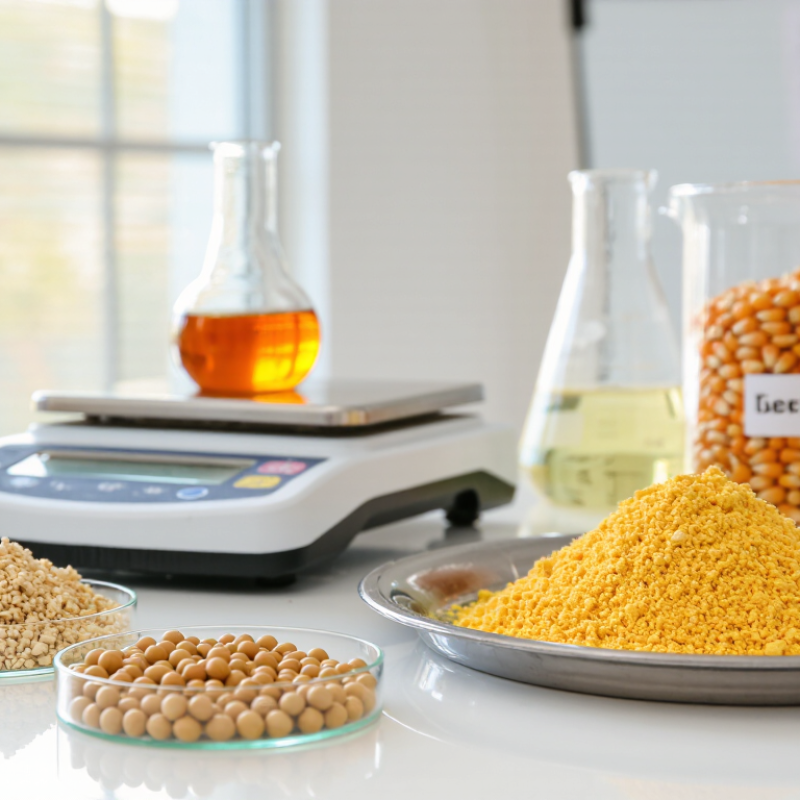
What Are Soybean Meal and Corn Gluten Meal?
Why Is Soybean Meal Often Blended With Corn Gluten Meal?
Soybean meal is the protein-rich solid left after extracting oil from soybeans. Corn gluten meal comes from wet-milling corn, after starch separation. It is not wheat gluten. Feedipedia reports typical crude protein levels near 46% for soybean meal and 60% for corn gluten meal. These figures vary with processing, moisture, and laboratory methods.
Their amino acid profiles explain the blend. Soybean meal usually supplies more lysine, an amino acid important for muscle growth. Corn gluten meal is richer in methionine and leucine, but its lysine content is much lower. The combination can create a more balanced protein supply for poultry, pigs, and some aquaculture diets. USDA Foreign Agricultural Service reports also identify soybean meal as the leading globally traded protein meal. However, trade volume does not guarantee equal feeding value. The neat numbers can mislead.
Tips: Check the product specification, not only the protein percentage. Review moisture, fiber, lysine, methionine, digestible amino acids, and mycotoxin test results. Feedipedia notes meaningful variation among samples. A bright yellow color may look reassuring, but it cannot replace laboratory analysis. I would also compare the complete diet, because excessive corn gluten meal can reduce lysine balance. Formulation software helps, but practical farm results still deserve attention.
How Do Their Nutritional Profiles Complement Each Other?
Soybean meal and corn gluten meal complement each other through amino acid balance, not simply protein quantity. Typical soybean meal contains about 44–48% crude protein, while corn gluten meal approaches 60% on a dry-matter basis, according to Feedipedia ingredient tables. However, soybean meal supplies more lysine and tryptophan. Corn gluten meal contributes more methionine and leucine. This contrast can reduce nutritional gaps in poultry and swine diets.
The NRC Nutrient Requirements of Swine reports that lysine is often the first limiting amino acid in cereal-based diets. Soybean meal helps address that weakness. Corn gluten meal can support sulfur amino acid supply, especially when formulation targets restrict synthetic methionine. Its high leucine content also deserves attention. Too much leucine may disturb the balance among branched-chain amino acids.
The blend is not automatically better. Ingredient quality varies.
In practical formulation, nutritionists should compare digestible amino acids, not crude protein alone. Heat damage can reduce amino acid availability in soybean meal. Excessive processing may also affect corn gluten meal quality. Feed testing remains important, particularly for moisture, protein, and amino acid variation. NRC values provide a reliable baseline, but farm results may differ with animal age, genetics, fiber levels, and energy density. A small inclusion change can alter the entire diet balance. That detail is easy to underestimate. Calculating with current laboratory data is safer than trusting a fixed recipe.
Sources: National Research Council, Nutrient Requirements of Swine, 2012; Feedipedia, Soybean Meal and Maize Gluten Meal Feed Tables.
Soybean meal and corn gluten meal provide complementary amino acid profiles. Corn gluten meal is typically higher in crude protein and methionine, while soybean meal supplies substantially more lysine. Blending them can help create a more balanced protein source for animal diets. Values shown are representative dry-matter averages and may vary by processing method and product quality.
How Is the Blend Formulated for Different Livestock?
Why Is Soybean Meal Often Blended With Corn Gluten Meal?
Feed formulation changes with species, age, and production target. Feedipedia profiles commonly report soybean meal at about 44–48% crude protein, while corn gluten meal often reaches 60–65%. The blend can raise protein density without relying on one ingredient alone. It also changes amino acid balance, energy supply, and pellet behavior.
Broiler diets usually prioritize digestible lysine, methionine, and energy. Soybean meal supplies useful lysine, while corn gluten meal contributes concentrated protein and methionine. However, excessive corn gluten meal may create a lysine gap. NASEM poultry guidance supports balancing diets with digestible amino acids, not crude protein alone. That distinction matters in a feed mill.
Pig formulations need careful attention to standardized ileal digestible amino acids. A higher soybean meal share may support lysine requirements during rapid growth. Corn gluten meal can reduce soybean meal inclusion, but its leucine level may become disproportionately high. For dairy cattle, NASEM 2021 recommendations require attention to rumen-degradable and undegradable protein. A blend may support microbial protein production, but fiber and rumen energy still control results. Fish diets require another adjustment. Protein digestibility and palatability become more important than simply increasing protein percentage.
In practice, the calculation is rarely clean. Ingredient test results vary by processing conditions. Mycotoxin screening, moisture checks, and updated laboratory data should guide each batch. A fixed recipe can be wrong. The better approach uses species-specific nutrient targets, least-cost modeling, and regular performance checks against Feedipedia profiles and NASEM nutrient requirement reports.
Why Is Soybean Meal Often Blended With Corn Gluten Meal?
How Is the Blend Formulated for Different Livestock?
1. Typical Nutritional Characteristics of the Two Protein Ingredients
| Ingredient |
Typical Crude Protein |
Typical Lysine Level |
Typical Methionine Level |
Fiber and Energy Profile |
Main Nutritional Contribution |
Soybean meal
Commonly dehulled, solvent-extracted meal |
Approximately 44–48% of dry matter |
Approximately 2.7–3.0% of dry matter |
Approximately 0.60–0.70% of dry matter |
Moderate fiber; generally higher lysine availability than corn gluten meal |
Provides highly usable protein and lysine, supporting muscle growth, milk production, egg production, and tissue maintenance |
Corn gluten meal
High-protein fraction from corn wet milling |
Approximately 58–65% of dry matter |
Approximately 0.6–1.0% of dry matter |
Approximately 1.5–2.0% of dry matter |
Low fiber, high protein, and typically rich in sulfur amino acids; lysine and tryptophan are relatively low |
Raises protein concentration and complements soybean meal with methionine and cystine |
2. Why the Ingredients Are Commonly Blended
| Formulation Objective |
Contribution of Soybean Meal |
Contribution of Corn Gluten Meal |
Practical Benefit of Blending |
| Improve amino-acid balance |
Supplies lysine and a broad amino-acid profile |
Supplies relatively more methionine and cystine |
Reduces dependence on a single protein source and can produce a more balanced amino-acid pattern |
| Increase protein density |
Provides concentrated, digestible protein |
Usually contains more crude protein than standard soybean meal |
Raises the protein concentration of the blend while allowing the nutritionist to adjust lysine separately |
| Support flexible feed formulation |
Useful when lysine is the first limiting amino acid |
Useful when additional sulfur amino acids or pigment are desired |
Allows the blend to be adapted to species, growth stage, feed price, and ingredient availability |
| Manage diet characteristics |
Contributes palatability and a familiar protein base |
Contributes low fiber and, in poultry diets, natural xanthophyll pigments |
Can help balance protein quality, texture, pigment, and nutrient density |
3. Illustrative Blend Formulations by Livestock Category
| Livestock Category |
Typical Soybean Meal Share of the Protein Blend |
Typical Corn Gluten Meal Share of the Protein Blend |
Approximate Crude Protein of the Blend |
Primary Formulation Priority |
Important Adjustment |
| Broiler starter |
70–85% |
15–30% |
Approximately 48–50% |
High digestible lysine and balanced essential amino acids for rapid lean growth |
Check digestible lysine, methionine, threonine, tryptophan, and available phosphorus; do not use corn gluten meal as a direct replacement for soybean meal on an equal-weight basis |
| Broiler grower or finisher |
65–80% |
20–35% |
Approximately 49–52% |
Maintain efficient protein supply while controlling feed cost and dietary amino-acid density |
Balance digestible amino acids and energy; excessive corn gluten meal may reduce lysine and tryptophan adequacy |
| Growing-finishing pigs |
75–90% |
10–25% |
Approximately 47–49% |
Provide digestible lysine for lean tissue deposition and acceptable palatability |
Formulate on standardized ileal digestible amino acids; consider tryptophan, threonine, valine, and isoleucine as soybean meal is reduced |
| Dairy cattle |
60–80% |
20–40% |
Approximately 49–52% |
Supply rumen-degradable protein together with rumen-undegraded protein and adequate metabolizable amino acids |
Evaluate rumen degradability, total ration fiber, sulfur intake, and the balance between crude protein and fermentable energy |
| Beef cattle |
50–75% |
25–50% |
Approximately 50–54% |
Provide concentrated protein for growing cattle, especially when forage protein is insufficient |
Use the blend according to forage quality and production stage; excessive protein may increase nitrogen excretion without improving gain |
| Sheep and goats |
60–85% |
15–40% |
Approximately 48–52% |
Support microbial protein synthesis and growth or milk production |
Monitor total dietary sulfur and copper because small ruminants have species-specific mineral sensitivities |
4. Example Calculation for a Protein Blend
| Example Blend |
Soybean Meal Quantity |
Corn Gluten Meal Quantity |
Assumed Protein Values |
Calculated Blend Protein |
Interpretation |
| Starter poultry blend |
75 kg per 100 kg of protein blend |
25 kg per 100 kg of protein blend |
Soybean meal: 46%
Corn gluten meal: 60% |
49.5%
(0.75 × 46) + (0.25 × 60) |
The blend increases protein density while retaining a substantial soybean meal contribution for lysine |
| Swine grower blend |
80 kg per 100 kg of protein blend |
20 kg per 100 kg of protein blend |
Soybean meal: 46%
Corn gluten meal: 60% |
48.8%
(0.80 × 46) + (0.20 × 60) |
A moderate inclusion of corn gluten meal adds protein and sulfur amino acids without greatly reducing the lysine-rich ingredient |
| Ruminant protein blend |
65 kg per 100 kg of protein blend |
35 kg per 100 kg of protein blend |
Soybean meal: 46%
Corn gluten meal: 60% |
50.9%
(0.65 × 46) + (0.35 × 60) |
A higher corn gluten meal share can be considered when concentrated protein and rumen protein characteristics fit the complete ration |
Formulation note: The inclusion ranges and nutrient values above are representative formulation examples, not universal requirements. Actual diets should be calculated from laboratory nutrient analyses, digestible or metabolizable amino-acid values, animal age, production stage, forage quality, energy supply, mineral levels, and local feed regulations. Corn gluten meal should not replace soybean meal solely on a crude-protein basis because its lysine and tryptophan concentrations are substantially lower.
Conclusion
Soybean meal and corn gluten meal are widely used plant-based protein ingredients in animal feed, but they offer different nutritional strengths. Soybean meal generally provides a well-balanced amino acid profile and high-quality protein, while corn gluten meal contributes concentrated protein, energy, pigments, and relatively high levels of certain amino acids. This explains why is soybean meal often blended with corn gluten meal: combining them can improve the overall nutrient balance and create a more flexible feed ingredient than using either one alone.
The blend can support efficient growth, muscle development, egg production, or milk production when properly formulated for poultry, swine, cattle, and other livestock. Its exact composition depends on the animal’s age, species, production goals, digestibility requirements, and the nutrient values of the available ingredients. Quality also depends on processing conditions, freshness, moisture, storage, protein concentration, amino acid availability, and the absence of contamination. Careful formulation and quality control are therefore essential to maintain consistent performance and avoid unnecessary nutrient costs.
 Akston Health
